


Distinctive Voices and Stories That Matter: The Competition Section at the 20th Five Flavours
Ten films, ten extraordinary stories. From a Sri Lankan road movie that is both dramatic and contemplative, through the complex everyday lives of South Korean teenagers whose fall from popularity into complete ostracism is triggered by a single toxic social media post, to a visually eclectic fairytale from Singapore featuring Lee Kang-sheng – New Asian Cinema showcases some of the most exciting work in contemporary Asian filmmaking. We are delighted to unveil the complete competition line-up for the 20th edition of Five Flavours whose winner will receive the Grand Prix prize of PLN 25,000, funded by the Polish Film Institute.
The New Asian Cinema Competition features ten films from ten different countries.
Selecting films for the New Asian Cinema section is always a special and deeply responsible task – the culmination of months of searching and hundreds of hours spent watching films from major international festivals. The final selection brings together works by promising debut filmmakers and directors who, though not yet widely known internationally, already stand out for their bold artistic vision and distinctive style. Together, the films form a cohesive chorus, offering an authentic perspective on the social, political and cultural issues facing Asian countries, while demonstrating that cinema across the region is thriving – constantly evolving and telling vital local stories.
This year, New Asian Cinema features ten films – ten remarkable stories from across Asia. The line-up spans countries that regularly feature in the competition, such as Japan, South Korea and Hong Kong, as well as less frequently represented countries including Sri Lanka, Bangladesh and Cambodia. We have no doubt that these filmmakers’ names will continue to resonate in the years to come, and that their stories will stay with you long after the screenings.

Grand Prix Award
The festival’s Best Film will receive the Grand Prix prize of PLN 25,000, funded by the Polish Film Institute, along with a crane statuette designed by visual artist and film editor Laura Pawela. The origami crane references the award presented in the Jagoda Murczyńska Film Criticism Competition and symbolizes hope, peace, and remembrance.
People’s Jury
As always, the festival’s winners will be selected by the People’s Jury, made up of nine Asian cinema enthusiasts from across Europe:
- Xiang Hu (Finland / China)
- Heeyeon Park (United Kingdom)
- Irene Bakola (Greece)
- Hanhee Oh (Germany / South Korea)
- Gaia Ferrazzano (Italy)
- Weronika Murek (Poland)
- Mikołaj Drobczyński (Poland)
- Julia Kobielska (Poland)
- Igor Kaj (Poland)
New Asian Cinema Competition - Full Programme
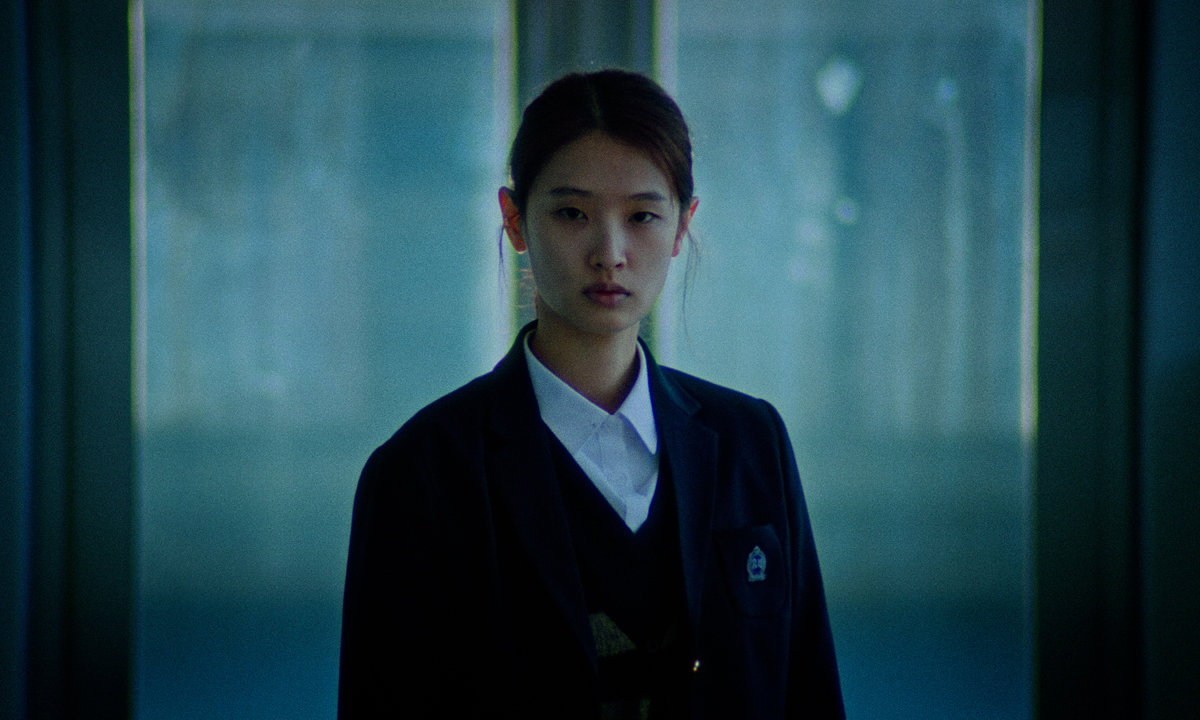
Funky Freaky Freaks
Chung chung chung
dir. Han Chang-lok, South Korea 2025, 87’
* Polish premiere *
[cinema + online]
Grey suburbs, the daily grind – nothing much ever happens here. Three school misfits, Yong-gi, Ji-sook, and Dum-bo, are doing their best to get by in a world where adults are barely present. When a new pupil, Woo-joo – a judoka on the national team with thousands of Instagram followers – joins the class, their relationships are thrown into turmoil. Buried emotions surface, fuelling jealousy and a desire for revenge. In his debut, Han offers an honest, raw portrayal of a world where a single targeted post online can destroy someone’s life.
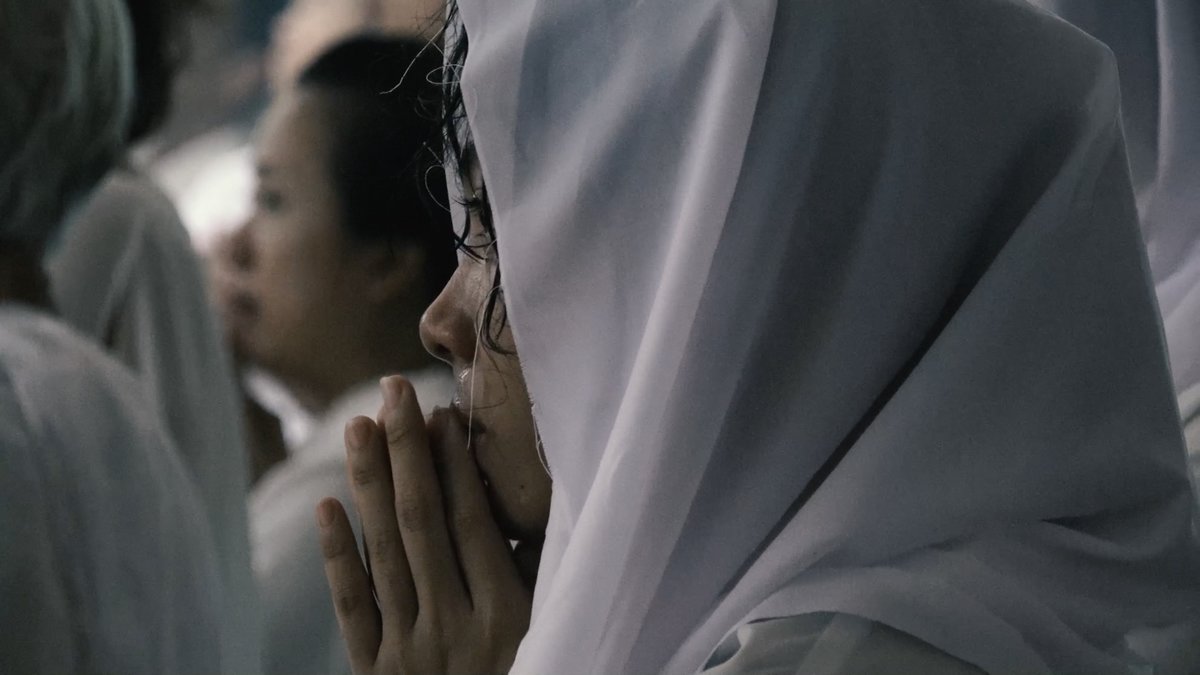
Whisperings of the Moon
dir. Lai Yuqing, Cambodia, Hong Kong, Indonesia, China, India 2025, 87’
* Polish premiere *
[cinema + online]
News of her father’s death forces Nisay, a young actress from New York, to return to her native Cambodia. There, she reunites with Thida, with whom she once shared a deep love. Despite the years apart, their suppressed feelings return with twice the intensity. As the boundary between past and present begins to blur, the women must face a painful reality and the prospect of another inevitable separation. This is the debut and final film by the Chinese director Lai Yuqing, who tragically died this year at the age of 23.
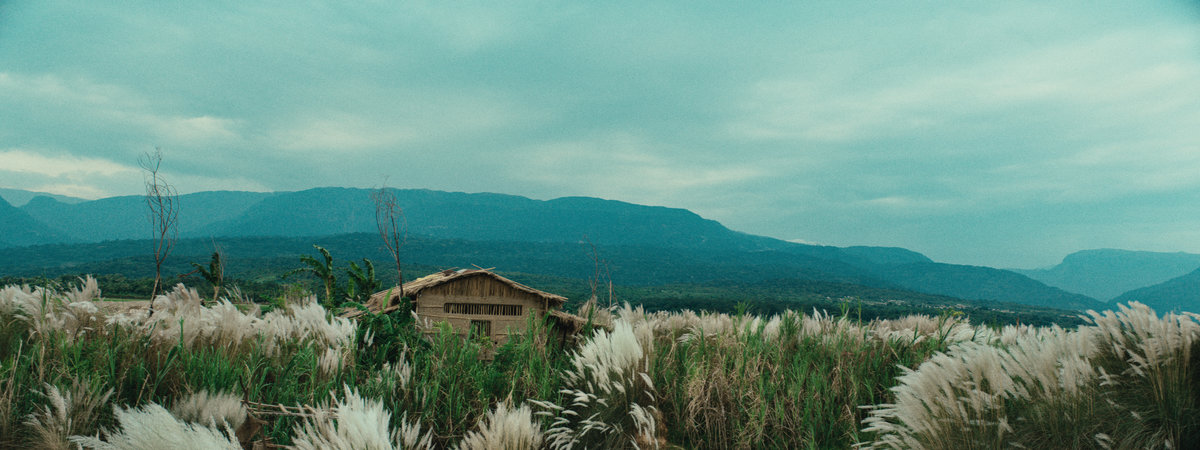
Roid
dir. Mejbaur Rahman Sumon, Bangladesh 2026, 127’
* Polish premiere *
[cinema only]
The story of Adam and Eve in Bangladesh. Mejbaur Rahman Sumon takes viewers into a world where myth and reality coexist, and humans and nature live in symbiosis. Roid tells the story of a primal, untamed woman, free from restrictive social conventions, who pays for her freedom with social ostracism. It is also a story of difficult love, desire, and living on one’s own terms. Sumon has created an allegorical, sensual film rich in symbolism, transporting viewers straight to the Bangladeshi countryside – or perhaps to the Garden of Eden itself.
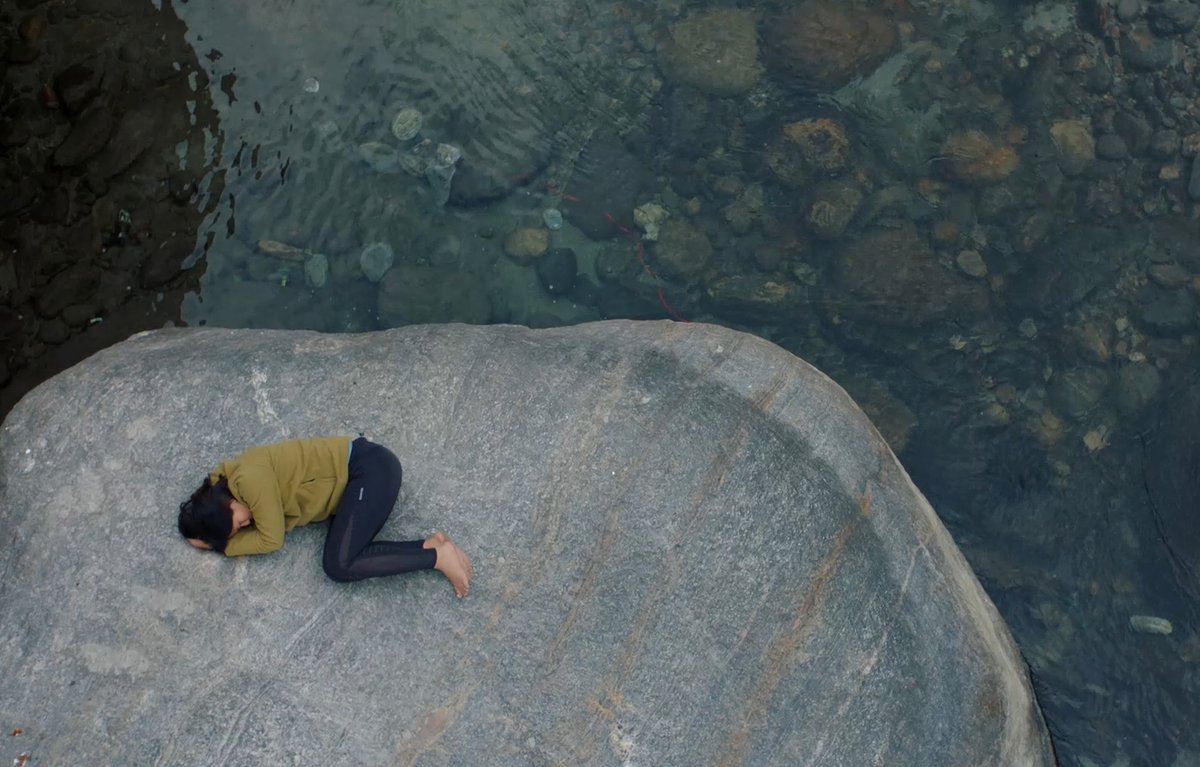
Shape of Momo
Chhora Jesto
dir. Tribeny Rai, India 2025, 114’
* Polish premiere *
[cinema + online]
Bishnu returns from Delhi to her family home in Sikkim, nestled at the foot of the Himalayas, to a household full of women. She brings with her a metropolitan rebellion against patriarchal norms that remain firmly entrenched in the provinces. A woman is expected to be like a momo dumpling – beautifully shaped, with its filling neatly contained. Bishnu wants to break the multi-generational cycle of women who meekly submitted to tradition, raised to believe that the birth of a girl was the result of a curse. In her debut, Tribeny Rai portrays a male-dominated world in which women negotiate the boundaries of their own freedom and independence.
Riverstone
dir. Lalith Rathnayake, Sri Lanka 2025, 119’
* Polish premiere *
[cinema + online]
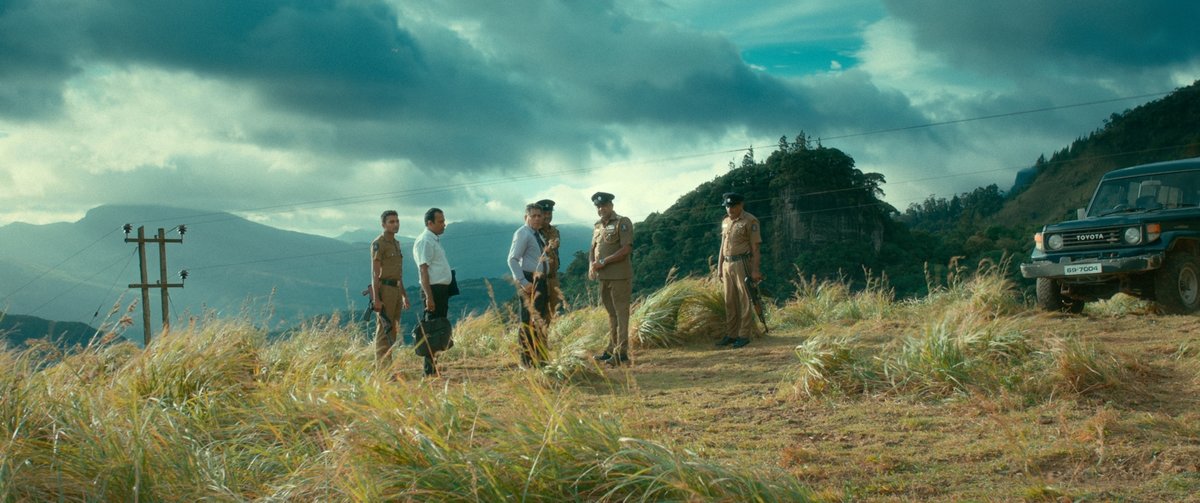
Three police officers escort a prisoner through the mountainous region of Sri Lanka. With every kilometre, the routine mission gathers weight – a journey that changes everything and changes nothing at all. The task is completed, but the three officers transporting the prisoner for an extrajudicial execution will not return unchanged. Though they carry out the order, deep within them a resistance begins to grow against continuing the samsara – the cycle of evil and the suffering it brings. Riverstone is a road movie that unfolds like a meditation on the meaning of life, violence, and the law of karma.
Mother Bhumi
Dì mǔ
dir. Chong Keat Aun, Malaysia, Hong Kong, Italy, Saudi Arabia 2025, 129’
* Polish premiere *
[cinema + online]
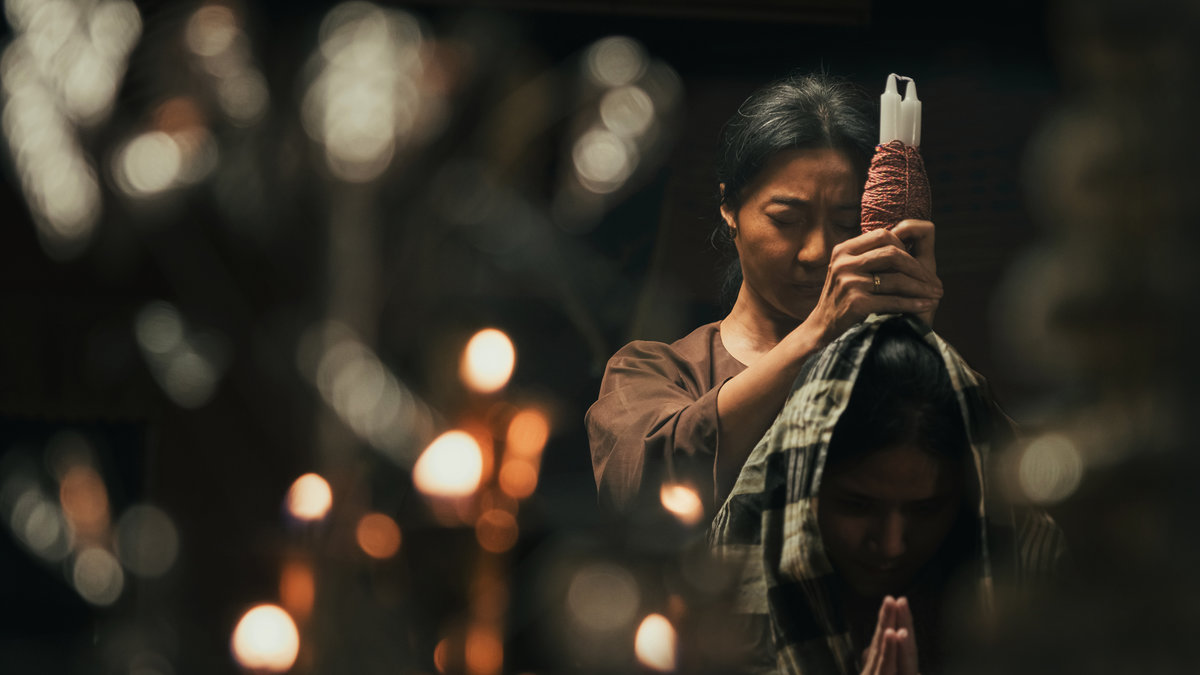
A village in the Bujang Valley, on the border between Malaysia and Thailand, in the late 1990s. Hong Im, a widow, is raising two children on her own. By day, she tends the rice fields and cares for her buffalo; after dark, she works as a folk shaman, helping her neighbours confront mysterious illnesses and dark forces. When the local community faces the loss of land inherited from their ancestors, Hong Im draws on her old connections to fight an unyielding bureaucracy. Amid grief and mounting border tensions, the shaman must confront the returning ghosts of the past.

Montages of a Modern Motherhood
Fu duk bat
dir. Oliver Chan Siu-kuen, Hong Kong 2024, 112’
* Polish premiere *
[cinema + online]
After years of trying, Jing and Wai welcome their long-awaited baby girl. Yet the first months with a newborn prove harder than Jing could have imagined. Sleepless nights, endless feedings, and hair falling out in clumps are just some of the challenges of motherhood, not to mention the cultural pressure to be a perfect mother. Overwhelmed by her attempts to return to work, the constant interference of her traditional mother-in-law, and her husband’s lack of support, Jing faces a difficult question: where does the line lie between maternal devotion and losing herself entirely?

Memorizu
dir. Miiku Sakanishi, Japan 2026, 98’
* Polish premiere *
[cinema only]
Yuta leaves Tokyo for a small town in Kyushu to help his father-in-law, a photographer who runs a traditional studio and is recovering from an accident. He stays longer than expected, away from his wife and daughter, gradually adjusting to the rhythm of local life. He keeps in touch with his family through photographs and short videos sent from his smartphone, creating a peculiar mosaic of everyday life and longing. Memorizu is a subtle meditation on the role of memory and photography, showing how images can hold time still before the here and now turns irrevocably into memories.
Hearing
Thính Giác
dir. Lê Bảo, Vietnam, Singapore, Norway, France, Indonesia, Saudi Arabia, Cambodia, Thailand, Taiwan 2026, 128’
* Polish premiere *
[cinema + online]
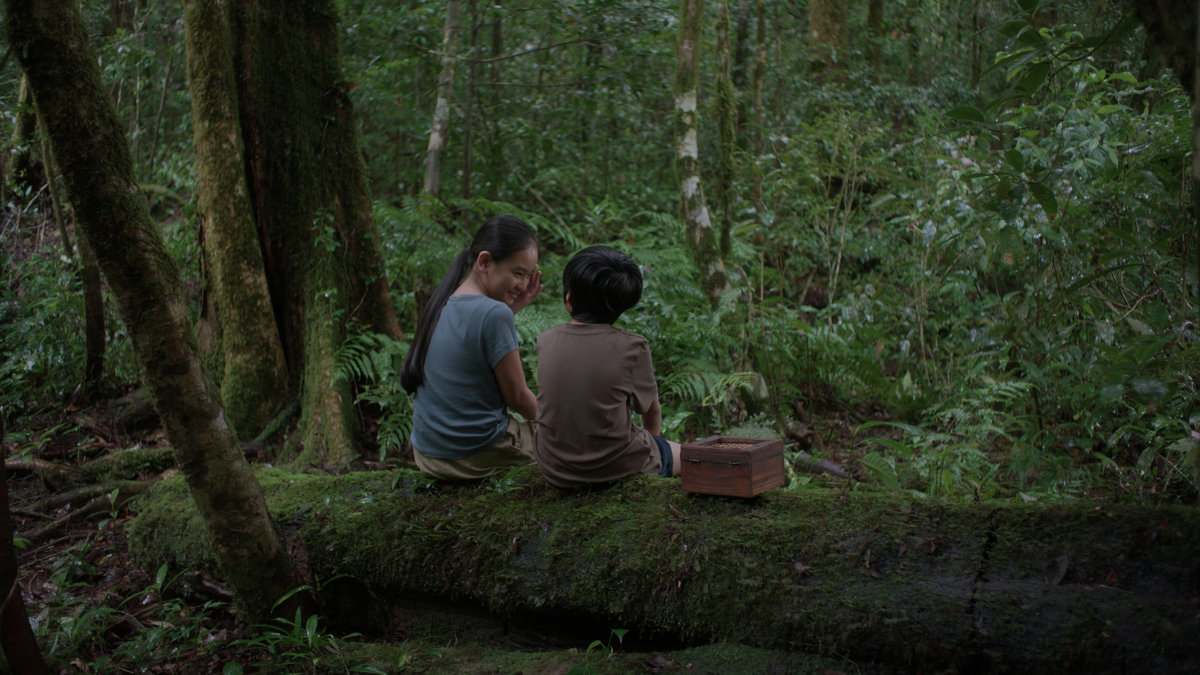
Ninh works as a technician, installing decibel meters in public and private spaces. When the devices detect noise pollution, he pays closer attention to those moments when silence can truly resonate. They remind him of the fractured relationships within his own family: his longing for his ex-wife and children, and the silence between his parents. Lê Bảo’s poetic, sound-driven story is a personal, melancholic journey through lost connections and unspoken words, revealing the vulnerability buried deep within human secrets.
The House on the Moon
Míng yuè gòng cǐ shí
dir. Nelson Yeo, Singapore, Taiwan, Germany, Indonesia 2026, 99’
* Polish premiere *
[cinema only]
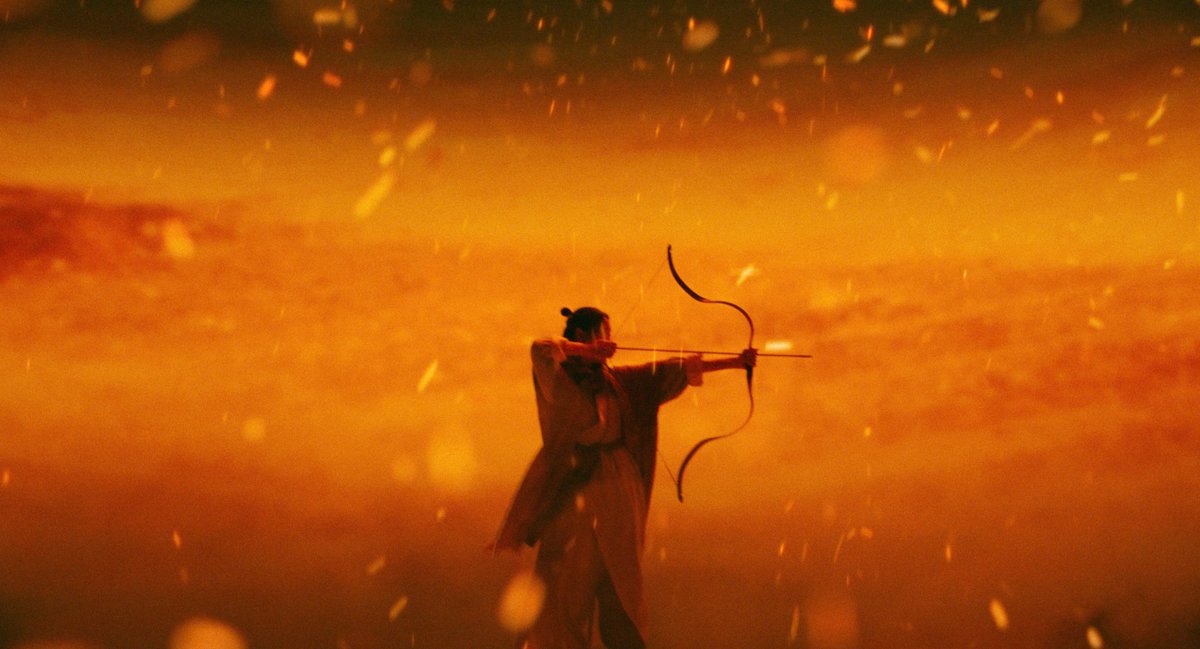
When Hou Yi, the legendary sun archer who set out to save the fading Sun, vanishes during his quest, the fairy Chang Er sets out to find her beloved. Dying of longing, she is prepared to travel to the far side of the Moon to save him. The film by Nelson Yeo, director of Dreaming & Dying (2023), is a post-apocalyptic fairy tale blending Chinese mythology, science-fiction aesthetics, and wuxia – an eclectic story full of unexpected turns and tinged with nostalgia for 1990s Hong Kong cinema. Lee Kang-sheng, known for his roles in Tsai Ming-liang’s films, plays the god of love.