


The Arch
Press Play to start

 Polish premiere
Theatrical Screenings
Muranów
Muranów
Online Availability
Additional Materials
Film description
For her devotion to her late husband, Lady Dong is to be honoured with a “chastity arch” bearing her name. Yet she begins to develop feelings for a captain staying on her estate - a man who soon becomes the object of her daughter’s affection as well. Lady Dong thus risks not only her reputation but also her bond with her own child.
Though the plot may resemble that of a melodrama, do not be misled by its surface. Spiritually new wave and radically experimental for its time, “The Arch” by Tang Shushuen is a singular and groundbreaking work. An adaptation of a traditional Chinese folktale, it was one of the first independently produced films in Hong Kong - a milestone in Chinese-language art cinema and feminist thought. In her most significant film, Tang went against the grain of popular trends, framing her story through a proto-feminist lens that foregrounds female emotional subjectivity. “The Arch” fuses traditional Chinese aesthetics with a modernist cinematic language characterised by dynamic editing and experimental form. Today, it can be viewed as an early feminist intervention - a daring act at a time when such debates barely existed.
The restoration of The Arch is made possible by the support of CHANEL, M+’s Major Partner.
text:
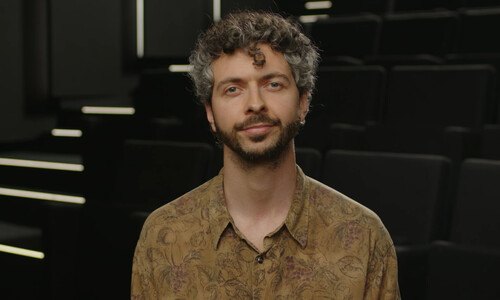
Łukasz Mańkowski
T'ang Shushuen
A pioneer of Hong Kong independent cinema and one of the most important directors in the history of Chinese-language film. She was born in Yunnan province and studied at the University of Southern California, where she absorbed Western influences, later transferring them to Asian soil. This resulted in a radical, formally innovative debut, “Mrs. Dong” (1968) – the first independent film in Hong Kong – which immediately gained the status of a groundbreaking work. In it, Tang combined poetic modernism with the tradition of Chinese aesthetics. Her next film, China Behind (1974), depicts the dramatic attempt of a group of students to escape from revolutionary China to Hong Kong. The uncompromising tone of the film led to it being banned from broadcast for 13 years by the colonial authorities. After a few years, Tang gave up directing and opened a restaurant serving traditional Chinese cuisine in Los Angeles, where she still lives today. In the 1970s, she ran a film magazine in Hong Kong called Close-Up. Although her filmography is short, Tang Shushuen's influence on the later Hong Kong New Wave cannot be overestimated – it was she who paved the way for bold, self-reflective, and socially critical cinema.
1968 The Arch
1974 Zai Jian Zhongguo / China Behind
1975 Shi San Bu Da / Thirteen
1975 Sup Sap Bup Dup / Sup Sap Bup Dup
1979 The Hong Kong Tycoon